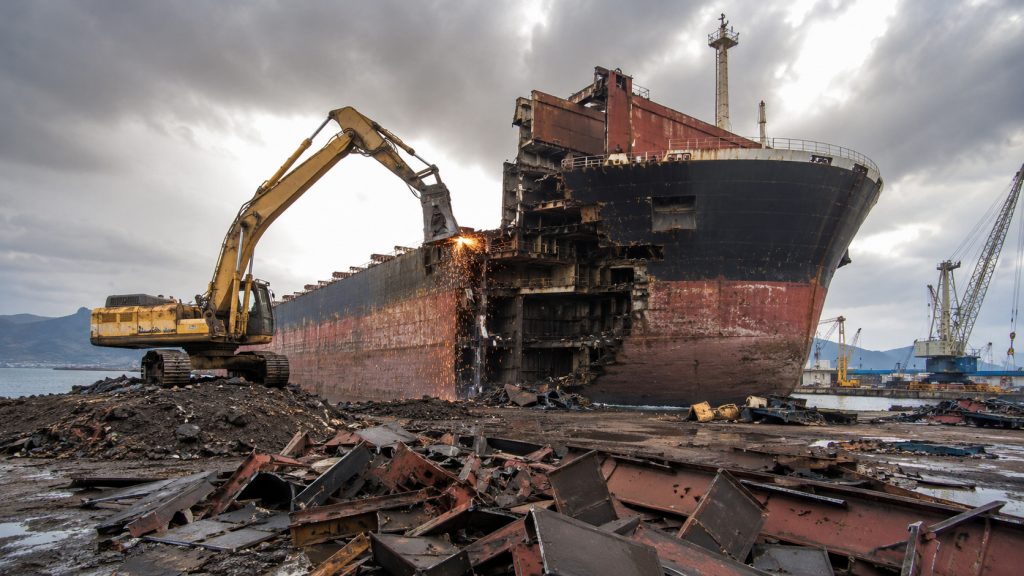
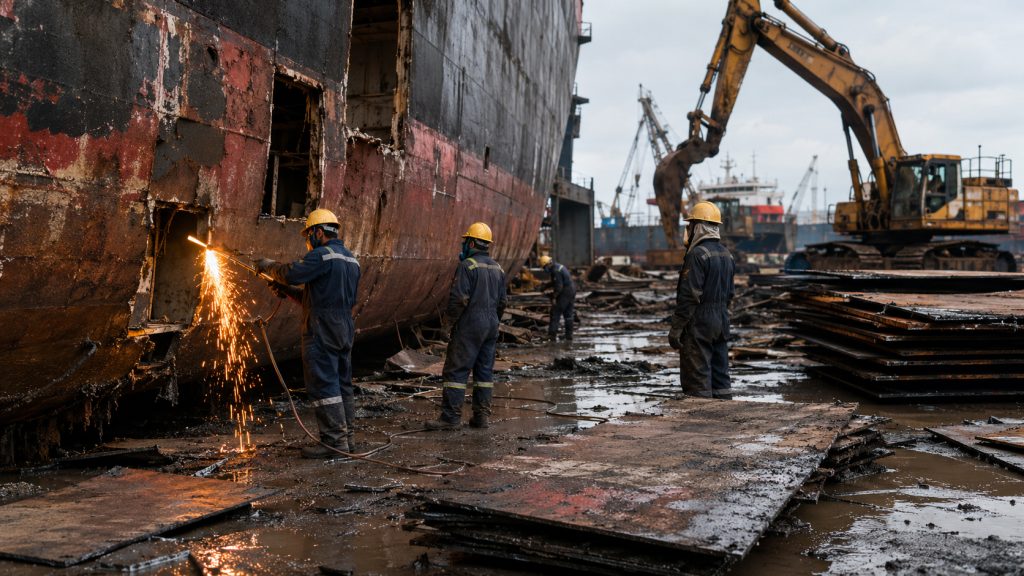
Environmentally responsible, internationally standards-compliant ship recycling and dismantling services.
Pasha Metal provides environmentally focused solutions in the field of ship recycling in many countries, primarily including the United States, Argentina, Russia, Ukraine, Germany and Denmark, with its long-standing industry experience. In line with our working model based on ecological sustainability, we operate in cooperation with numerous private organizations and public institutions.
Within the scope of projects carried out at the level of Ministries of Communications, Defense and Environment, the recycling processes of military vessels, commercial dry cargo ships, tankers and fishing vessels have been successfully completed. Thanks to our operation management approach in compliance with international standards, our company actively takes part in ship recycling projects of various scales.
Through our international partnerships and technical operational experience, our company has become a reliable solution partner in ship recycling activities carried out on a global scale. With the operational infrastructure we have developed and our sustainable working model, we continue to maintain our steady growth in the sector.
Our company conducts ship recycling processes in accordance with national and international environmental regulations. In particular, we continue our activities in compliance with current regulations concerning hazardous waste separation, storage and environmental protection.
Stages of Recycling
Preliminary Examination and Risk Analysis
Before the recycling process begins, the vessel is examined in detail from a technical perspective, and environmental risk assessments and hazardous material analyses are carried out.
Safe Dismantling Operations
Controlled dismantling operations are carried out using equipment and expert personnel in compliance with international safety standards.
Waste Separation and Storage
Hazardous and recyclable materials are classified in designated separation areas and stored safely.
Environmental Protection Processes
To prevent soil, marine and air pollution, all operations are carried out on impermeable surfaces and with protective systems.
Recovery and Shipment
Separated metals and other recyclable materials are processed and shipped in accordance with international recycling standards.
Technical Processes and Facility Infrastructure
1) Environmental Protection and ground safety
During the beaching phase of the ships' recycling process, specially insulated areas are used. This prevents direct absorption into the sand and soil, protecting the marine and terrestrial ecosystems. Throughout the process, care is taken to ensure that ship parts do not come into direct contact with the natural ground.
2) Controlled Dismantling Process
Large-scale dismantling operations for the parts of ships that are docked at the bow or stern of the facility and that are above sea level by three meters, are carried out at the location where the ships are docked. The sections remaining at lower levels are dismantled in special impermeable work areas located a minimum of 15–20 meters inland from the shoreline.
To prevent possible leaks between the impermeable ground and the coastline, oil collection systems, grating, and grille infrastructures are used.
3) Technical Characteristics of the Facility
• Facility entrance and exit security systems
• Operation area surrounded by wire fencing and security walls
• Open and closed storage areas
• Winch room
• Safe storage areas for oxygen and LPG tanks
• Energy facility and generator infrastructure
• Temporary waste storage areas
• Liquid waste tank farms
• Fire and emergency response rooms
• Main fire station and fire circuit system
• Recycling areas with concrete floors
• 24/7 facility lighting systems
• Industrial weighing system
• Radiation measurement devices
4) Hazardous Waste and Safety Equipment
a) Floating oil barriers,
b) Floating oil absorbent barriers,
c) Oil absorbent pads and cushions,
ç) Empty plastic drum (drum),
d) Chemical absorbent buffers,
e) Chemical absorbent sockets,
f) Nitrile work gloves, boots and protective gear,
Occupational Health and Environmental Safety
The main objective of the R&D unit operating within Pasha Metal is to ensure the highest level of occupational health, employee safety and environmental sustainability throughout all operational processes.
The Early Detection and Warning System (ETUS), developed by our company, instantly detects potential risks such as fire, hazardous gases, and chemical liquid or solid wastes that may be harmful to human health, and transmits this information directly to the main control center.
All operational areas are monitored 24/7 through fixed and motion-sensitive cameras, while real-time inspections are carried out by occupational safety specialists. In this way, potential occupational safety violations can be addressed quickly, and operational safety is maintained at the highest level.