International standards-based sunken vessel detection, recovery, and recycling services for marine environmental protection and economic recovery.
As Pasha Metal, we actively operate in sunken ship salvage and recycling projects with the aim of protecting the marine environment, supporting economic recovery processes, and promoting sustainable recycling practices.
Within the scope of projects carried out in coordination with the Ministries of Environment of coastal countries, the first stage involves identifying and analyzing sunken ships and preparing inventory studies. Based on the technical data obtained, joint operational plans are developed with the relevant public institutions, and the processes are managed professionally.
These operations are carried out in cooperation with Ministries of Transport, maritime authorities, port administrations, coastal protection units, customs directorates, and Ministries of Interior. Prior to each operation, technical analyses are conducted in line with the prepared ship salvage plans, environmental risks are assessed, and safe working procedures are implemented.
Through these activities, both economic recovery is achieved and the protection of the marine ecosystem is supported. In particular, by removing vessels that have remained on the seabed for many years and pose environmental risks, the prevention of marine pollution is targeted.
Our company actively takes part in many projects through pre-agreed purchasing models and international partnerships. Sunken ship salvage, recycling, and environmental improvement processes are professionally managed by our expert teams.
With our international operational experience, technical infrastructure, and environmentally focused working model, we continue to operate as a reliable solution partner in the fields of marine cleanup and sustainable recycling.
Operation Processes
Sunken Ship Detection and Analysis
Sunken ships located on the sea floor are detected using special equipment and technical analysis methods, and environmental and operational risk assessments are conducted.
Recovery Planning
In coordination with relevant institutions, rescue scenarios are developed and operational area security procedures are prepared.
Environmental Risk Management
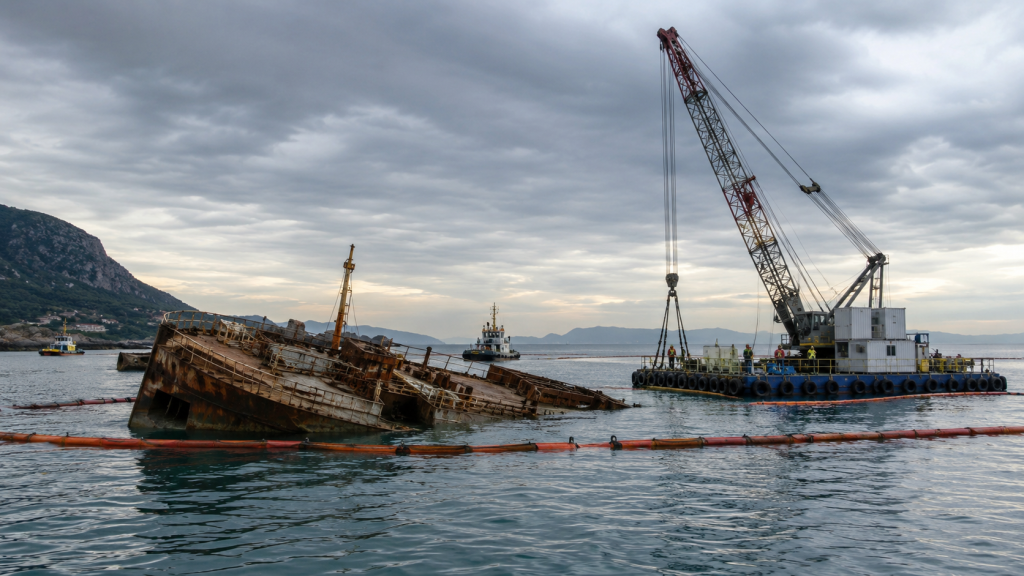
To prevent fuel, oil, and hazardous substances from entering the sea, special environmental protection systems are in place.
Controlled Rescue Operations
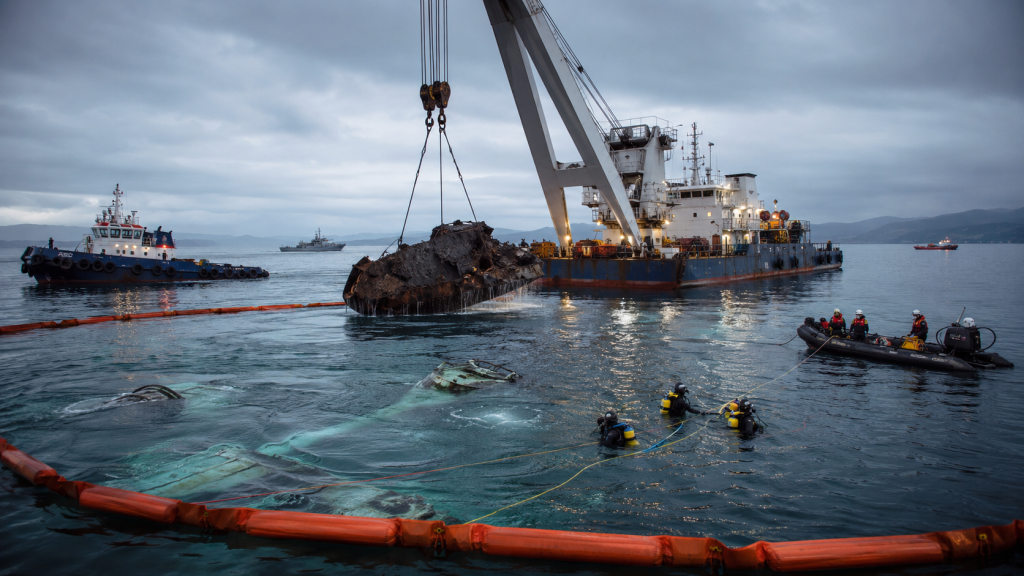
Using specialized teams and heavy lifting equipment, the controlled removal of sunken ships is ensured.
Recycling and Separation
The salvaged ships are transported to recycling facilities, where metal, equipment, and other materials are separated in accordance with environmental standards.
Technical Processes and Operation Management
1) Sunken Ship Inventory Studies
Before the operation, the location, structural condition, and environmental risk levels of sunken ships on the seabed are analyzed in detail. Operation planning is carried out through sonar systems, underwater inspection equipment, and technical reporting processes.
2) Corporate and Official Process Management
Sunken ship operations are carried out in coordination with Ministries of Environment, port authorities, maritime institutions, and relevant official authorities. All operations are conducted in compliance with national and international environmental regulations.
3) Marine Environmental Protection Systems
During the operation, the protection of the marine ecosystem is considered a primary objective.
In this context:
• Oil containment systems
• Marine surface protection equipment
• Spill prevention systems
• Emergency response equipment
• Hazardous waste collection systems
• Surface cleaning equipment
are being used actively.
4) Safe Salvage Operations
During the removal of sunken ships, expert diving teams, heavy-lifting cranes, and marine operation equipment are used. Employee safety and environmental protection procedures are implemented simultaneously across the operation areas.
Our Environmental and Occupational Safety Policy
At Pasha Metal, we adhere to the principles of environmental sustainability and occupational safety in all shipwreck operations.
On operation sites:
• 24/7 security inspections
• Emergency response teams
• Gas and liquid leak detection systems
• Marine pollution prevention equipment
• Employee protection procedures
are actively implemented.
Our company contributes to economic recovery through its sustainable operational model that protects the marine ecosystem, while minimizing environmental risks to the minimum level.